The inescapable number
this post describes what is cibil and how it is important
What is a CIBIL Score and Why It Matters in India
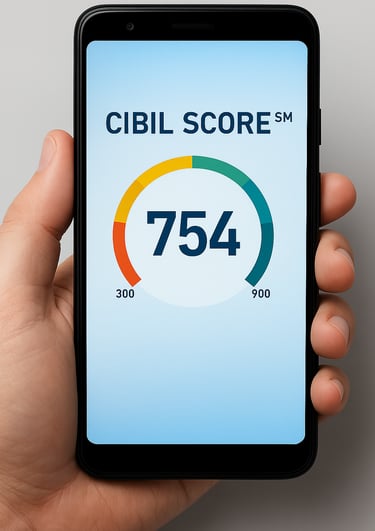
Short answer: A CIBIL score is a 3-digit number (300–900) that summarises your credit behaviour. Banks and NBFCs in India check it before giving you a loan or credit card. A higher score = easier approvals and better interest rates.
Who is CIBIL?
CIBIL stands for Credit Information Bureau (India) Limited (now TransUnion CIBIL). It is one of India’s four RBI-licensed credit bureaus (the others are Experian, Equifax and CRIF High Mark). Lenders report your repayment data to these bureaus every month. The bureaus then build your credit report and calculate your credit score.
CIBIL score range and what it means
ScoreWhat lenders usually thinkWhat it means for you750–900ExcellentFast approvals, best rates, higher limits700–749GoodApprovals likely, rates generally decent650–699AverageMay get approved with conditions or higher rates550–649WeakHigh risk; tough to get fresh credit300–549PoorRejections very likelyNA/NH“No history” or not enough dataYou’re new to credit (NTC); start building history
Scores are indicative; each lender has its own policy.
What goes into your CIBIL score?
CIBIL doesn’t publish exact weights, but these factors are known to matter:
Repayment history: on-time EMIs and credit-card dues vs. delays/“Days Past Due (DPD)”.
Credit utilisation: how much of your credit limit you use (staying under ~30% is healthier).
Length of credit history: older, well-managed accounts help.
Credit mix: a balance of secured (home/car) and unsecured (card/personal loan) is better than only unsecured.
Recent enquiries: many hard enquiries (multiple loan/card applications) in a short time can pull the score down.
CIBIL score vs. credit report
Score: the 3-digit summary.
Report (CIR): detailed account-wise history—limits, current balances, DPD, “written-off/settled” remarks, and enquiries.
Lenders look at both. For example, a good score won’t ignore a recent “settled” status or frequent delinquencies visible in the report.
Why your CIBIL score matters (real-world impact)
Loan approvals: Home, car, personal, education—first screen is your score and report.
Interest rates: Higher score can unlock lower ROI and processing-fee waivers.
Credit-card limits & rewards: Better products and higher limits are offered to stronger profiles.
Top-ups and balance transfers: Easier if your score is strong and report is clean.
Faster turnaround: Pre-approved offers are often based on your bureau profile.
Common myths—busted
“Checking my own score reduces it.”
No. Your self-check is a soft inquiry and does not affect your score.“High income guarantees approval.”
No. Lenders care more about repayment behaviour and existing obligations (FOIR) than salary alone.“Closing old credit cards improves score.”
Often the opposite—closing old, good accounts can shorten your history and reduce total limit (hurting utilisation %).
How to check your CIBIL score for free (legally)
Every RBI-licensed bureau must give one free full credit report (FFCR) per year. That means you can get one free report from each of CIBIL, Experian, Equifax, and CRIF High Mark annually.
You can also see your score via many bank apps or net-banking portals.
How to improve your CIBIL score (practical plan)
Never miss due dates: Enable auto-debit; even 1–30 DPD hurts.
Tame utilisation: Keep monthly card usage under ~30% of the limit; request limit enhancement rather than maxing out.
Avoid “settlements”: Try to close the account by paying dues fully. “Settled” stays as a negative remark.
Limit new applications: Batch applications trigger multiple hard enquiries—space them out.
Keep old good accounts open: They build length of history.
Diversify smartly: Having only unsecured credit may be viewed as riskier than a balanced mix.
Dispute errors: If you spot wrong DPD/duplicate accounts, raise a dispute with the bureau—they coordinate with the lender to correct it.
FAQs
1) Is 750 a good CIBIL score?
Yes. Many lenders treat 750+ as a strong range.
2) I’m “NA/NH”. What should I do?
Start with a secured credit card against a fixed deposit or take a small consumer loan and repay on time for 6–12 months.
3) How long do late payments stay?
Delinquencies can appear for years; the score improves gradually once you maintain perfect repayments and reduce balances.
4) Does closing a personal loan increase my score immediately?
It can help your leverage/utilisation, but the impact depends on your overall mix and payment track record.
Key takeaways
CIBIL score is a quick risk signal; your report details seal the decision.
For best approvals and rates in India, target 750+, maintain low utilisation, and keep a long, clean history.
Check your free report annually and fix errors early.
Want help reading your report or building a 90-day score-improvement plan? Share your current score, open loans/cards, and monthly EMIs—I’ll map out exact steps.nt